

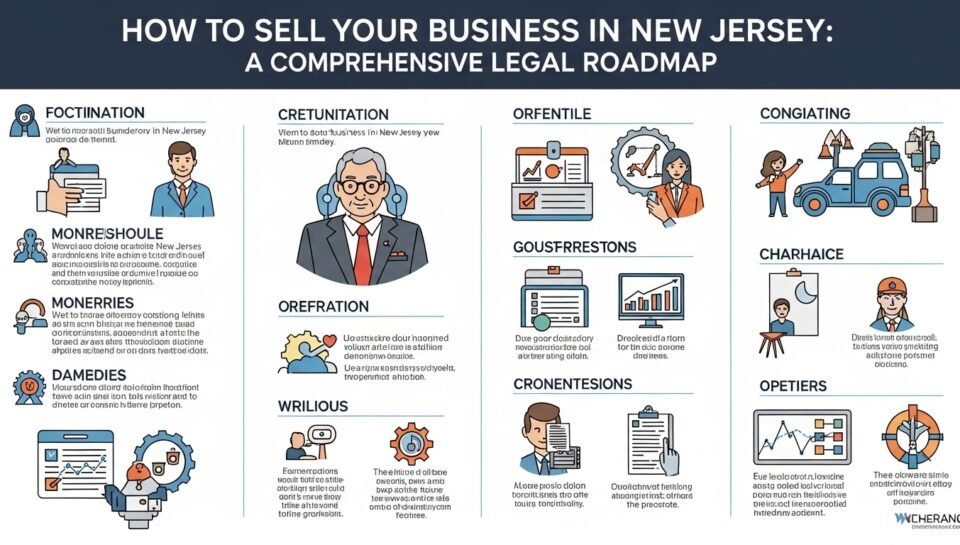
Selling a business is the culmination of years—often decades—of hard work, sacrifice, and strategic growth. In a commercially vibrant state like New Jersey, the process is rewarding but legally intricate. Whether you are a founder looking to retire in Monmouth County or a tech entrepreneur in Middlesex County ready for your next venture, the legal transition of ownership requires more than just a handshake.
Navigating the “Exit” requires a proactive approach to legal planning. This guide breaks down the essential legal steps and considerations for selling your New Jersey business, ensuring you protect your legacy and your financial future.
1. Preparation and Pre-Sale Due Diligence
The most successful sales begin long before a buyer is found. In New Jersey, proactive legal planning is the cornerstone of a smooth transaction. “The only dumb question is the one you don’t ask,” and this is especially true when auditing your own company for potential “red flags”.
- Internal Compliance Audit: Ensure all corporate records, meeting minutes, and annual filings with the New Jersey Division of Revenue are up to date.
- Contract Review: Analyze existing agreements with vendors, landlords, and employees. Are these contracts assignable to a new owner? A Business Legal Risk Analysis can identify “change of control” clauses that might complicate a sale.
- Financial Clarity: Buyers will scrutinize your tax returns and profit-and-loss statements. Having clean, legally compliant financial records is non-negotiable.
2. Protecting Confidentiality: The NDA
Once you decide to go to market, you will be sharing sensitive information—client lists, trade secrets, and financial data—with prospective buyers. In New Jersey, an enforceable Non-Disclosure Agreement (NDA) is your first line of defense. It prevents a “buyer” from walking away with your proprietary information to start a competing firm or poaching your top talent during the negotiation phase.
3. Choosing the Right Structure: Asset vs. Stock Sale
One of the most critical legal decisions in a New Jersey business sale is how the transaction is structured. This choice has massive implications for taxation and liability.
- Asset Purchase Agreement (APA): The buyer purchases specific assets (equipment, inventory, goodwill, customer lists) rather than the legal entity itself. Sellers often prefer this for its simplicity, while buyers like it because they can avoid assuming the seller’s unknown liabilities.
- Stock Purchase Agreement (SPA): The buyer purchases the actual shares of the company. In this scenario, the buyer steps into the shoes of the seller, taking on the entity’s history, including all its past legal and financial liabilities.
4. Navigating New Jersey-Specific Regulations
New Jersey has unique legal requirements that can catch unwary sellers off guard.
- Bulk Sales Notification: Under New Jersey law (N.J.S.A. 54:50-38), the buyer must notify the State of the pending “bulk sale” of business assets at least 10 days before closing. Failure to do so can make the buyer liable for the seller’s unpaid state taxes. As a seller, you must cooperate with this process to ensure clear title.
- Environmental Compliance (ISRA): If your business is in an industrial sector, the Industrial Site Recovery Act (ISRA) may require environmental testing or remediation before the property or business can be sold.
- Employment and ABC Test Compliance: Ensure your workforce is correctly classified. New Jersey is strict regarding the “ABC Test” for independent contractors; misclassification can lead to significant liabilities that a buyer will expect you to resolve before closing.
5. Negotiating the Letter of Intent (LOI)
The LOI outlines the “bones” of the deal—the purchase price, payment terms, and the expected timeline. While often labeled as “non-binding,” the LOI sets the stage for the final Business Transactions and often includes binding “exclusivity” clauses that prevent you from talking to other buyers for a set period.
6. The Closing Process and Beyond
The final stage involves drafting and signing the definitive purchase agreement. This document will include:
- Representations and Warranties: Statements of fact about the business’s health.
- Indemnification Clauses: Agreements on who pays if a problem arises after the sale.
- Non-Compete Agreements: Buyers typically require the seller to agree not to open a competing business within a certain geographic area (like Monmouth or Ocean County) for a specific number of years.
7. Succession Planning: Your Next Chapter
Selling a business isn’t just a transaction; it’s a transition. Effective Succession Planning ensures business continuity and a smooth leadership handover, protecting the employees and clients you’ve spent years serving.
Why Legal Experience Matters
With nearly six decades of experience in New Jersey business law, Paul H. Appel, Esq., understands that the best way to handle a business dispute is to prevent it before it starts. Selling a business involves high stakes and complex moving parts—from mergers and acquisitions to specialized contract drafting.
By establishing a “Trusted Advisor Relationship,” the Law Offices of Paul H. Appel provides the proactive guidance necessary to navigate the pitfalls of NJ commercial law. Whether you are a small startup or a large enterprise, having a veteran attorney in your corner ensures that your exit is as successful as your entry.