

Buying a business is one of the most significant financial decisions you will ever make. Whether you are acquiring a local restaurant, a service company, or a mid-sized manufacturing operation, the excitement of entrepreneurship can easily overshadow the legal complexities lurking beneath the surface. In New Jersey, business acquisitions involve layers of due diligence, contract negotiation, liability assessment, and regulatory compliance — all of which demand experienced legal guidance. Without proper legal representation, buyers frequently inherit problems they never saw coming: hidden debts, defective contracts, unresolved litigation, tax liabilities, and more.
This guide is for any buyer who wants to understand how a business purchase lawyer in NJ protects their interests at every stage of the transaction — and why skipping legal counsel is a risk no serious buyer should take.
The High Stakes of Buying a Business Without Legal Protection
Many buyers approach a business acquisition the way they would a real estate deal — they focus on the price, shake hands, and assume the paperwork is routine. But a business purchase is far more complex than buying a property. When you buy a business, you are not just acquiring assets. You may be stepping into existing contracts, employment obligations, vendor relationships, customer agreements, intellectual property issues, regulatory licenses, and debts — known or unknown.
New Jersey law does not automatically shield a buyer from a seller’s past liabilities unless the transaction is properly structured. Courts in NJ have, in various circumstances, held buyers responsible for successor liability even when they believed they were purchasing clean assets. This makes legal structuring critical from day one.
A qualified business purchase lawyer in NJ will ensure that the transaction is designed to protect you — and that every document, disclosure, and representation is examined before you sign anything.
Understanding the Transaction Structure: Asset Purchase vs. Stock Purchase
One of the first and most consequential decisions in any business acquisition is whether you are buying the assets of the business or the stock (equity) of the legal entity. This choice has major implications for your liability exposure, tax treatment, and what you actually receive.
In an asset purchase, you select which specific assets and liabilities you want to acquire. This structure generally offers greater buyer protection because you can exclude known liabilities, pending lawsuits, or problematic contracts. In a stock purchase, you acquire the entire legal entity — including all of its history, liabilities, and obligations — whether you know about them or not.
For most buyers in New Jersey, an asset purchase is the preferred structure because it provides more control over what you are taking on. However, there are situations — such as when the business holds licenses or contracts that cannot be assigned — where a stock purchase may be necessary.
Understanding the implications of each approach requires an attorney with deep transactional experience. You can learn more about how these two structures compare in the New Jersey context by reviewing Asset Purchase vs. Stock Purchase in New Jersey, which walks through the legal and practical differences in detail.
Due Diligence: The Buyer’s Most Important Tool
Due diligence is the investigative process by which a buyer examines every aspect of the business before committing to the purchase. It is not a formality — it is the cornerstone of buyer protection in any acquisition.
A thorough legal due diligence review covers:
Financial Records. Tax returns, profit and loss statements, accounts receivable, accounts payable, and cash flow reports must be reviewed and verified. Sellers sometimes present financial data that looks strong on the surface but conceals seasonal volatility, one-time revenue spikes, or inflated income figures.
Contracts and Agreements. Every contract the business has entered into — with customers, vendors, landlords, lenders, and employees — must be reviewed. Key questions include: Are these contracts assignable? Are there change-of-control clauses that could trigger termination upon sale? Are there unfavorable renewal terms or automatic escalations?
Litigation and Legal Exposure. A buyer must know whether the business is involved in any pending lawsuits, regulatory investigations, or unresolved disputes. These can represent significant financial exposure post-closing.
Tax Compliance. Unpaid payroll taxes, sales tax obligations, and other tax liabilities can follow a business — and in some cases a buyer — after the transaction closes.
Licenses and Permits. Many industries in New Jersey require specific licenses that are not automatically transferable. If the business you are buying cannot legally operate without a license that is held by the current owner personally, you could face a gap in operations after closing.
Intellectual Property. If the business relies on proprietary software, trade names, patents, or trade secrets, the buyer needs to verify these are properly owned and protectable.
For a detailed breakdown of what a professional due diligence review entails, see Business Acquisition Due Diligence Lawyer NJ, which explains how an experienced attorney approaches this critical stage of a transaction.
Undisclosed Liabilities: A Major Buyer Risk
One of the most common — and costly — surprises buyers encounter after closing is discovering liabilities that were never disclosed by the seller. These can include:
- Lawsuits filed after the closing date but arising from pre-closing conduct
- Unpaid vendor invoices or supplier disputes
- Employee wage claims or wrongful termination claims
- Environmental cleanup obligations
- Outstanding loans or personal guarantees taken on by the business
In some cases, sellers are unaware of these issues. In others, they are deliberately concealed. Either way, the buyer ends up holding the bag unless the purchase agreement contains robust representations, warranties, and indemnification provisions.
An experienced business purchase lawyer will draft and negotiate these provisions carefully — ensuring that the seller makes specific legal representations about the state of the business, and that you have a clear right to seek damages or hold back funds from closing if those representations turn out to be false.
To understand the types of liabilities buyers most commonly encounter, review Buying a Business with Undisclosed Liabilities, a resource that outlines common scenarios and how legal protection is structured to address them.
The Purchase Agreement: Where Buyer Protection Is Built or Lost
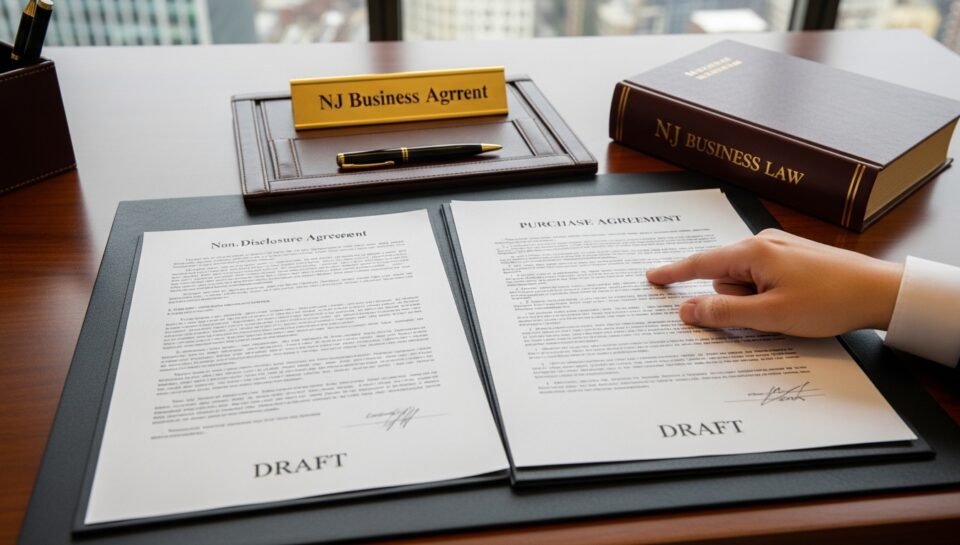
The purchase agreement is the central legal document in any business acquisition. It defines what is being sold, at what price, under what conditions, and with what protections for each party. Many buyers make the mistake of accepting a seller’s draft agreement without significant negotiation — or worse, using a generic template that fails to account for the specifics of the deal.
A well-drafted purchase agreement for a buyer includes:
Representations and Warranties from the Seller. These are the seller’s legal promises about the state of the business — that the financials are accurate, there is no undisclosed litigation, all taxes are paid, all licenses are valid, and so on. If any of these representations turn out to be false, you have legal recourse.
Indemnification Provisions. These clauses require the seller to compensate you for losses arising from their misrepresentations or undisclosed liabilities. The scope, duration, and caps on indemnification are heavily negotiated and can mean the difference between recovering your losses or absorbing them.
Conditions Precedent. These are conditions that must be satisfied before closing can occur — such as obtaining a landlord’s consent to a lease assignment, obtaining a regulatory license transfer, or the seller obtaining key employee agreements.
Escrow or Holdback Provisions. In many deals, a portion of the purchase price is held in escrow for a period after closing as security against indemnification claims. This protects the buyer if problems emerge shortly after the deal closes.
Non-Compete Agreements. To prevent the seller from simply opening a competing business next door and taking all the customers and employees, a well-drafted non-compete clause is essential.
Closing Conditions and Walk-Away Rights. Your attorney should ensure that if material adverse changes occur between signing and closing — a major customer leaves, a lawsuit is filed, a key employee resigns — you have the contractual right to walk away or renegotiate.
Buyer Representation: Having an Advocate in Your Corner
In any negotiation, the party without representation is at a structural disadvantage. The seller almost certainly has an attorney. That attorney’s job is to protect the seller’s interests — not yours.
Buyer representation means having a business attorney who understands acquisition transactions, who can identify risks you might not see, who can negotiate contract terms that work in your favor, and who can advise you when a deal is not worth doing at all. Sometimes the most valuable advice a lawyer gives is to walk away.
Business Buyer Representation Lawyer NJ Guide outlines what comprehensive buyer representation looks like and why it matters at every stage — from letter of intent through closing.
Risk Assessment: Knowing What You Are Getting Into
Beyond due diligence, a skilled business purchase attorney will help you conduct a holistic risk assessment of the acquisition. This goes beyond reviewing documents — it involves analyzing the business’s market position, customer concentration, key-person dependency, regulatory environment, and operational vulnerabilities.
For example, if 70% of the business’s revenue comes from a single client, that is a material risk that should affect how the deal is structured or priced. If the business depends entirely on the owner’s personal relationships, those relationships may not survive the ownership transition. If the industry is facing regulatory changes that could affect profitability, a buyer needs to understand that exposure before signing.
Risk Assessment for Business Purchase Attorney NJ explains how a legal risk assessment works and why it is an essential part of a buyer’s pre-closing strategy.
Post-Closing Considerations
Buyer protection does not end at the closing table. After the deal closes, a number of legal matters require attention:
Transition Agreements. If the seller is staying on temporarily to help with the transition, a consulting or employment agreement should be in place to define the terms clearly.
License and Permit Transfers. Ensuring that all required licenses and permits are transferred or reissued in your name is a post-closing legal priority.
Contract Novations and Assignments. Formally notifying vendors, customers, and counterparties of the change in ownership and ensuring assignment of key contracts is properly documented.
Employment Matters. Reviewing inherited employment contracts, benefits obligations, and HR policies to ensure compliance with New Jersey employment law.
Regulatory Filings. Depending on the transaction structure and industry, various state and federal regulatory filings may be required post-closing.
Why Choose The Law Offices of Paul H. Appel
The Law Offices of Paul H. Appel has represented business buyers throughout New Jersey for decades. Based in Freehold, NJ, the firm serves clients across Monmouth County, Middlesex County, Ocean County, and statewide. Attorney Paul H. Appel, a Columbia Law School graduate with over 58 years of experience in commercial and business law, provides hands-on, proactive legal counsel that goes beyond paperwork.
His approach is built on open communication, thorough preparation, and a commitment to addressing problems before they become liabilities. Whether you are buying a small business or navigating a complex multi-entity acquisition, the firm brings the depth of experience and personalized attention your deal demands.
Final Thoughts
Buying a business is an exciting opportunity — but without proper legal protection, it can quickly become a costly mistake. In New Jersey, the legal landscape for business acquisitions is complex, and the risks are real. From structuring the deal to negotiating the purchase agreement to conducting due diligence and assessing risk, every step of the process requires experienced legal guidance.
Do not let the excitement of a deal cause you to skip the steps that protect you. Work with a business purchase lawyer in NJ who understands what is at stake and knows how to protect your investment from day one.
Contact The Law Offices of Paul H. Appel today to schedule a consultation and take the first step toward a secure, well-protected business acquisition.