

Running a small business in New Jersey means wearing a dozen hats at once — sales, operations, HR, finance, and yes, legal compliance. Most small business owners know they need legal guidance, but the traditional model of hiring a full-time in-house attorney feels financially out of reach. That gap between “I need legal help” and “I can afford it” is exactly where Virtual General Counsel (VGC) steps in.

This guide breaks down what Virtual General Counsel actually means for small business compliance, why it matters more than ever in today’s regulatory environment, and how NJ business owners are using it to stay protected without the overhead.


What Is a Virtual General Counsel?

A Virtual General Counsel is an experienced business attorney who serves as your dedicated legal advisor on an ongoing basis — without being a salaried employee of your company. Think of it as having a trusted attorney in your corner at all times, available when you need guidance, without the overhead of a full-time hire.

Unlike hiring a lawyer on a purely reactive, “break glass in emergency” basis, a VGC relationship is proactive and continuous. Your VGC learns your business, understands your industry, anticipates risks before they become problems, and gives you the day-to-day legal support that growing businesses genuinely need.

For small businesses in New Jersey, this model has become increasingly popular — particularly among companies that have moved past the startup phase but aren’t large enough to justify a full-time legal department.


Why Small Business Compliance Is More Complex Than Ever

New Jersey has one of the more rigorous regulatory environments in the country. Whether you operate in retail, construction, professional services, or e-commerce, staying compliant involves a web of overlapping obligations:

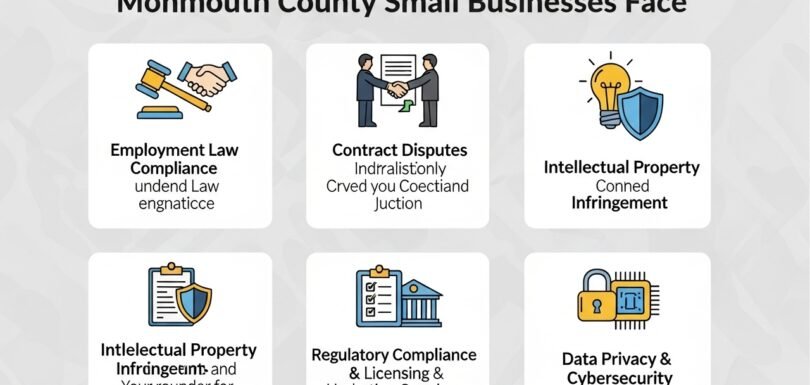
Employment Law Compliance — New Jersey’s wage and hour laws, anti-discrimination statutes, paid sick leave requirements, and the ABC Test for independent contractor classification are constantly evolving. Getting any of these wrong doesn’t just expose you to fines — it can result in class-action lawsuits from employees.

Contract Obligations — Every vendor relationship, client agreement, and lease you sign creates binding legal obligations. Without regular legal review, outdated or poorly drafted contracts silently accumulate risk.

Corporate Governance — Whether you operate as an LLC, S-Corp, or C-Corp, New Jersey law imposes governance requirements on your entity. Annual meetings, operating agreement compliance, and record-keeping aren’t optional — they’re what preserve the liability protection that made you incorporate in the first place.

Industry-Specific Regulations — Construction businesses face lien law compliance, prevailing wage obligations, and licensing requirements. Retailers deal with consumer protection rules. Professional services firms have their own licensing frameworks. A generalist approach to compliance isn’t enough.

Data Privacy and Digital Operations — If your business collects customer data online, you now operate in an environment shaped by both state and federal privacy regulations that carry real penalties for non-compliance.

The common thread across all of these is that they don’t announce themselves. Compliance failures tend to surface only when something goes wrong — and by then, the legal exposure is already real. This is precisely why having ongoing legal counsel through a Virtual General Counsel arrangement in NJ is no longer a luxury — it’s a strategic business decision.


What Does a Virtual General Counsel Actually Do for Your Business?

Many small business owners imagine legal services as event-driven — you call a lawyer when you’re sued, or when you need a specific contract drafted. A VGC relationship is different because it’s embedded into your business operations. Here’s what that looks like in practice:

Ongoing Contract Review and Management

Most small businesses sign contracts more often than they realize — with clients, vendors, landlords, subcontractors, and employees. Each of those agreements represents risk if it’s not properly drafted or reviewed. A VGC reviews your ongoing contracts as a matter of routine, flags problematic clauses, and ensures your agreements actually protect you rather than expose you.

This is especially important for businesses engaged in contract drafting, review, and negotiation in NJ, where the stakes of a poorly worded clause can be significant.

Answering Day-to-Day Legal Questions

Business owners face legal questions constantly — they just don’t always recognize them as such. “Can I classify this worker as an independent contractor?” “Do I need a written agreement for this vendor?” “What does this lease renewal clause actually mean?” These aren’t emergency questions, but they deserve real answers, not guesswork.

A VGC gives you fast, accurate answers to routine legal questions without the awkwardness of billing anxiety every time you pick up the phone.

Compliance Audits and Risk Assessments

A proactive VGC doesn’t wait for you to come to them with a problem — they periodically review your business operations to identify compliance gaps before regulators or opposing counsel do. This includes reviewing your employee handbooks, HR policies, corporate records, vendor agreements, and operational procedures.

For businesses in New Jersey’s highly regulated industries, startup legal support and compliance structuring from the beginning can prevent years of costly corrections down the road.

Strategic Business Guidance

Good legal counsel isn’t just about avoiding problems — it’s about enabling growth. A VGC who understands your business can advise you on the legal implications of expansion decisions, new partnerships, hiring strategies, and market entry. This is the kind of counsel that large corporations get from their in-house legal teams, and it’s exactly what a VGC delivers to small businesses.


Compliance Areas Where Small Businesses Are Most Vulnerable

Based on the types of issues that surface most frequently for small business owners in New Jersey, these are the compliance areas that demand proactive attention:

Independent Contractor Misclassification

New Jersey’s ABC Test is one of the strictest in the country. If you use independent contractors in your business, you need ongoing compliance review to ensure you’re not inadvertently creating an employee relationship. The financial exposure from misclassification — including back taxes, penalties, and employee benefit claims — can be severe.

Employee Handbook and HR Policy Gaps

Your employee handbook is a legal document, even if it doesn’t feel like one. Outdated harassment policies, missing paid leave provisions, or non-compliant termination procedures create both legal exposure and operational chaos. A VGC reviews these documents regularly and updates them as laws change.

Corporate Record Keeping

Many small businesses form an LLC or corporation for liability protection, then fail to maintain the corporate formalities that actually preserve that protection. A VGC ensures your records are current, your annual obligations are met, and your entity remains in good standing.

Commercial Lease Compliance

Commercial leases are among the most heavily negotiated and least understood documents small business owners sign. CAM charges, personal guarantee provisions, assignment clauses, and build-out obligations can create significant financial liability years after signing. Regular lease reviews with a VGC catch these issues before they become expensive.


VGC vs. Hiring an Outside Lawyer for Each Issue: What’s the Difference?

The transactional approach to legal services — calling an attorney only when something specific comes up — has real limitations for small businesses:

You pay for ramp-up time. Every time you engage a new attorney for a discrete matter, you’re paying for them to learn your business situation from scratch.

Reactive is expensive. Legal problems that are caught early, in the compliance review stage, almost always cost less to fix than legal problems that have already materialized into disputes or regulatory action.

You don’t know what you don’t know. A lawyer you call only for specific matters can’t identify the risks you haven’t thought to ask about. An ongoing VGC relationship creates the continuity that allows an attorney to spot issues proactively.

Relationship quality matters. Trust, context, and communication depth all improve over the course of an ongoing attorney-client relationship. Your VGC knows your business the way a long-term partner does — not the way a one-time service provider does.

For businesses that have experienced disputes and understand the cost of legal problems after the fact, business litigation and dispute resolution services in NJ represent the expensive alternative to what proactive compliance through a VGC prevents.


Who Benefits Most from Virtual General Counsel Services?

While virtually any small business can benefit from ongoing legal counsel, certain business profiles tend to gain the most from a VGC arrangement:

Growing businesses with increasing operational complexity — Once you have employees, multiple vendor relationships, commercial leases, and a significant client contract portfolio, the legal surface area of your business has grown beyond what you can manage through occasional legal consultations.

Businesses in regulated industries — Construction, healthcare-adjacent services, food service, financial services, and professional services all operate in heavily regulated environments where compliance requirements change frequently.

Businesses that have experienced legal problems — Companies that have been through a contract dispute, an employment claim, or a regulatory investigation often become the strongest advocates for ongoing legal counsel. The VGC model makes sense once you understand what the alternative actually costs.

Startups building for scale — The legal foundation you establish in your early years follows you. Entity structure, founder agreements, IP ownership, and employment practices established early are difficult and expensive to unwind later.

Businesses approaching or navigating transactions — If you’re considering buying a business, selling your company, or entering a significant partnership, having an attorney who already understands your business deeply is invaluable. An experienced VGC can also support you through business acquisition due diligence in NJ when the time comes.


What to Look for in a Virtual General Counsel

Not all VGC arrangements are equal. When evaluating an attorney for this role, consider:

Depth of business law experience — Your VGC will touch every aspect of your business operations. You need an attorney whose practice is focused on business and commercial law, not a general practitioner who dabbles in business matters.

Proactive communication style — The value of a VGC comes from proactive identification of issues, not just responsive answers to questions you remember to ask. Look for an attorney who communicates regularly and initiates reviews without being prompted.

Industry familiarity — An attorney who understands your industry’s regulatory landscape brings immediate value that a generalist cannot match.

Geographic knowledge — For New Jersey businesses specifically, state-specific knowledge matters. New Jersey’s employment laws, corporate statutes, lien laws, and court systems have nuances that require local expertise.

Long-term relationship orientation — The best VGC relationships are long-term partnerships built on mutual trust. Look for an attorney whose philosophy aligns with building that kind of trusted advisor relationship over time.


The Role of VGC in Business Compliance Audits

One of the most concrete deliverables a Virtual General Counsel provides is the compliance audit — a structured review of your business operations, contracts, HR policies, corporate records, and regulatory standing. These audits are not about finding fault; they’re about identifying gaps before those gaps become liabilities.

A well-structured compliance audit for a small business typically covers:

  • Corporate record-keeping and entity maintenance
  • Employment policies and handbook currency
  • Independent contractor classification practices
  • Active contract review (client agreements, vendor contracts, leases)
  • HR policy alignment with current New Jersey law
  • Governance practices and shareholder or member agreement currency
  • Industry-specific regulatory compliance

The findings from a compliance audit give you a clear, prioritized picture of where your legal exposure lives and what to do about it. Corporate governance review services in NJ are a natural complement to this process, ensuring that your entity structure is functioning the way it was designed to.


Why New Jersey Small Businesses Specifically Need Proactive Legal Support

New Jersey’s business environment rewards well-prepared operators and punishes those who treat legal compliance as an afterthought. The state’s strong employee protections, strict contractor classification rules, robust consumer protection statutes, and active regulatory enforcement environment all create meaningful risk for businesses that aren’t paying attention.

The good news is that the same environment that creates legal complexity also creates competitive advantage for businesses that manage it well. When your contracts are tight, your employees are properly classified, your corporate records are current, and your governance is sound, you operate from a position of strength — in negotiations, in transactions, and in disputes.

That’s the promise of Virtual General Counsel done right: not just legal defense, but legal leverage.


Final Thoughts

Small business compliance isn’t a one-time project — it’s an ongoing responsibility that evolves as your business grows and as the regulatory environment shifts. The Virtual General Counsel model exists precisely to meet that need in a way that’s sustainable, proactive, and genuinely integrated into how your business operates.

For New Jersey entrepreneurs who are serious about building businesses that last, the question isn’t whether you need ongoing legal counsel. It’s whether you’re getting it in a way that actually serves your business — or whether you’re leaving legal risk unmanaged until it surfaces at the worst possible moment.

The Law Offices of Paul H. Appel offers Virtual General Counsel services designed specifically for New Jersey small businesses. With more than five decades of experience in business and commercial law, Paul Appel brings the depth, continuity, and proactive orientation that the VGC model demands. Schedule a free consultation to discuss how ongoing legal counsel can protect and strengthen your business.