
Contract Disputes · New Jersey

Business Breach of Contract: Proving It, Valuing It, Resolving It

Not every broken promise is a breach you can recover for, and not every breach is worth a fight. Paul H. Appel helps New Jersey businesses work out which they are dealing with — and then pursue or defend the claim in the most economical way.

Start with the document

The contract you signed decides most of the dispute before anyone argues

When a vendor misses deadlines or a customer cancels a signed order, the instinct is to call it a breach and demand compensation. The more useful first step is to read the agreement again, slowly, with the dispute in mind.

Commercial contracts frequently contain the answers: a notice and cure clause that gives the other side a chance to fix the problem, a limitation of liability that caps what you can recover, an exclusion of lost profits, a requirement to mediate before suing, or a choice of New York law and courts. Any one of these changes your strategy. Ignoring them can turn a strong claim into a procedural mistake.

The firm reviews the agreement and the surrounding facts, tells you candidly whether there is a claim worth pursuing, and then works toward resolution — usually through a demand and negotiation, sometimes through mediation or arbitration, and through the courts only where that is genuinely necessary. That approach is described more fully in the overview of business dispute resolution.

The elements

What a New Jersey business must show to establish a breach

New Jersey courts generally require a party claiming breach of contract to prove four things. Each is a place where claims are won or lost:

  • A valid, enforceable contract — signed or not, but with terms definite enough to enforce. Emails and purchase orders can form a contract; so can a course of dealing.
  • Your own performance — that you did what the contract required of you, or were excused. A claimant who also failed to perform faces an immediate defense.
  • A breach by the other party — failure to perform a specific obligation, not merely disappointing performance of something the contract never promised.
  • Resulting damages — loss caused by the breach, provable with reasonable certainty.

Every contract in New Jersey also carries an implied covenant of good faith and fair dealing. It can support a claim where a party technically complied with the words but acted in bad faith to deprive the other of the benefit of the bargain, though it cannot override the contract's express terms.

Timing matters as well. Contract claims are generally subject to a six-year limitations period, with different rules for some sales of goods; when the clock starts is fact-specific. The guide to New Jersey limitation periods for business claims explains the general rules.

Measuring the loss

The kinds of damages a business may be able to recover

The aim of contract damages is to put the injured party where it would have been if the contract had been performed — no better and no worse.

  • Expectation damages

    The value of the performance you were promised, minus what you saved by not having to perform yourself. For a canceled order, that may be the lost margin rather than the full price.

  • Consequential damages

    Further losses that flow from the breach and were reasonably foreseeable when the contract was made — for example, penalties you owed your own customer. Many commercial contracts exclude these expressly.

  • Reliance and restitution

    Where profits are too speculative to prove, a party may instead recover what it spent in reliance on the contract, or the value of benefits it conferred on the other side.

  • Agreed sums

    Liquidated damages clauses set a figure in advance. They are generally enforceable if reasonable when agreed, but not if they operate as a penalty.

  • Specific performance

    Occasionally a court will order a party to do what it promised, usually where money cannot adequately replace the bargain, as with unique property.

  • What is usually not available

    Punitive damages are generally not awarded for breach of contract alone, and each side normally pays its own attorneys' fees unless the contract or a statute provides otherwise.

Rules that catch businesses out

Three obligations that apply even when you are the injured party

Mitigation

You must take reasonable steps to limit the loss

If a supplier fails to deliver, you are generally expected to source replacement goods at a reasonable price rather than let losses mount. Damages you could reasonably have avoided are usually not recoverable, so record what you did to reduce them.

Notice

Follow the contract's notice procedure exactly

Many agreements require written notice to a specified address, describing the breach, before the other side is in default. A text message to a project manager rarely satisfies that. Defective notice can delay or defeat a termination.

Cure

Allow the cure period to run

Terminating before a cure period expires may make you the party in breach. Where the other side does fix the problem within the period, your remedy may be limited to the cost of the delay.

Business people reviewing the notice and cure terms of a disputed contract at an office desk

If the claim is against you

Responding when another business says you broke the contract

  1. Do not reply in anger

    An immediate emotional response can contain admissions. Acknowledge receipt if appropriate, and take time to review.

  2. Check the contract and the timeline

    Was the other side performing? Was proper notice given? Did a cure period run? Do the limitation of liability or exclusion clauses apply?

  3. Identify defenses and counterclaims

    Prior breach by the claimant, waiver, failure to mitigate, an inflated damages figure and amounts they owe you are all common.

  4. Respond through counsel

    A measured written response sets out your position and, where appropriate, a path to settlement. It also signals that a claim will not be paid simply because it was asserted.

Questions & answers

Breach of contract — frequently asked questions

Is an email exchange enough to form a contract in New Jersey?

It can be. A contract does not need a formal signed document if the parties agreed on essential terms and intended to be bound; emails, purchase orders and invoices can together show that. Some agreements, however, must be in a signed writing to be enforceable, and informal exchanges invite disputes about what the terms were.

Can I recover lost profits from a breach?

Possibly, if they were a foreseeable result of the breach and can be proven with reasonable certainty, and if the contract does not exclude them. Established businesses with a track record are in a stronger position than new ventures whose projected profits are speculative. Check the limitation of liability clause first, because many commercial contracts waive consequential losses.

What if the other side says I breached first?

That is one of the most common defenses. If your own failure to perform was material, it may excuse the other party's later non-performance. The sequence of events, the importance of each obligation and the correspondence at the time all matter, which is why a detailed timeline is the first thing to prepare.

My dispute is about the sale of a business. Is this the right page?

Claims arising from a business purchase agreement have their own issues, such as representations, warranties, indemnity baskets and escrows. See the pages on breach of a business purchase agreement and indemnification claims after closing.

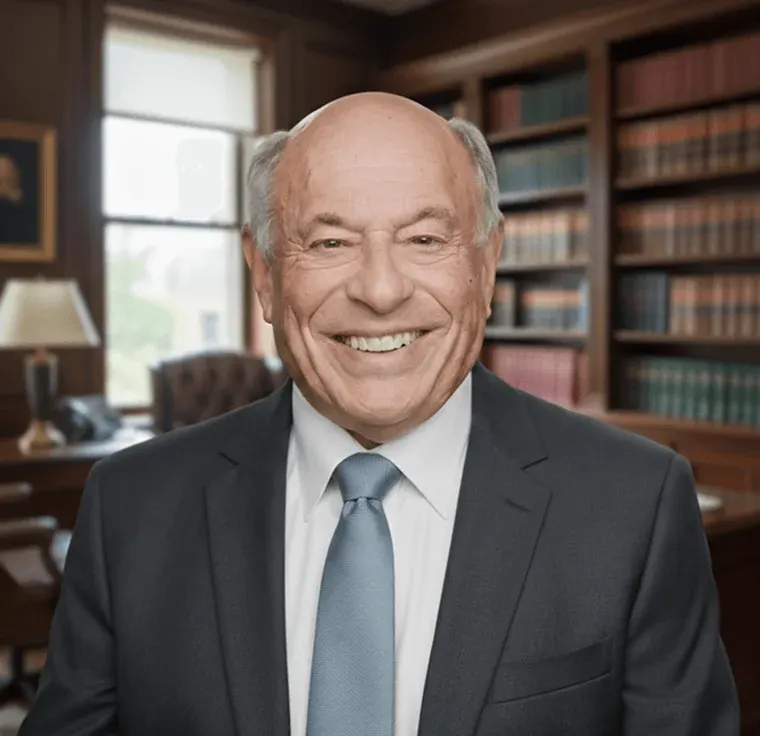
Paul H. Appel, Esq., business attorney, in his law library

Your attorney

Paul H. Appel, Esq.

Every matter at the firm is handled personally by Paul — the same attorney reads the documents, gives the advice and negotiates on your behalf.

Education
Columbia Law School, Juris Doctor (1967)
Experience
58+ years in commercial and business law
Focus for this matter
Negotiated resolution, mediation and arbitration of business disputes
Office
Freehold, NJ — serving Monmouth, Middlesex & Ocean Counties
More about Paul and the firm

Contact

Discuss Your Business Matter With Paul

Describe what the business is dealing with — a contract on your desk, a deal in progress, a dispute or a company you are about to form. You will hear back from the attorney who handles the work.

Start a conversation

Schedule a Free Consultation

Loading the secure consultation form… If it does not appear, call 917-748-6124 or email paul@paulappellaw.com.