Scenario
The early departure
One of three founders leaves after a few months to take a job. With no vesting, she keeps a third of the company. The remaining two now work for years to grow an asset that a passive owner shares equally.
The Law Offices of Paul H. Appel – Your Trusted Business Law Partner in New Jersey

Startup Legal Support · Founders
No New Jersey statute requires one, but almost every multi-founder company benefits from it. Here is what a founders agreement does, what it should cover, and what tends to go wrong without one.
The short answer
A founders agreement is a contract among the people starting a company that records who owns what, who does what, and what happens if someone stops showing up. It is not a filing and the state never sees it. Its value is entirely private: it replaces assumptions with written terms.
When there is no agreement, New Jersey law still supplies answers. An LLC without an operating agreement is governed by default rules in the Revised Uniform Limited Liability Company Act, and a corporation by the Business Corporation Act and its bylaws. Those defaults were not written with your particular split of money, effort and ideas in mind — and they generally do nothing to claw back equity from a founder who leaves in month three.
In many companies, the founder terms live inside the LLC operating agreement or a shareholder agreement rather than in a separate document. What matters is that the substance is covered and signed.
Core terms
Each of these is easy to agree on at the start and hard to negotiate once money or resentment is involved.
Each founder's percentage, and the reasoning behind it — cash, prior work, ongoing time commitment or specific expertise.
Vesting equity over time, often with a cliff, so a founder who leaves early does not keep a full share of a company others will build.
Who leads product, sales and finance, what decisions need everyone's approval, and who can sign contracts or spend money.
An assignment of every founder's relevant work, including anything created before the company was formed, into the entity.
What triggers a buyback, the price formula for unvested and vested equity, and whether a departure for cause is treated differently.
A path for breaking a tie between equal founders, and whether disagreements go to mediation or arbitration before court.
Without one
These patterns come up repeatedly in small companies that started on a handshake.
Scenario
One of three founders leaves after a few months to take a job. With no vesting, she keeps a third of the company. The remaining two now work for years to grow an asset that a passive owner shares equally.
Scenario
A technical co-founder wrote the original software before formation and never assigned it. When an investor asks for proof the company owns its product, the answer depends on someone who has since stopped returning calls.
Scenario
Two equal founders disagree on whether to accept an acquisition offer. With no tie-break mechanism, the company stalls, and the dispute may end up in a proceeding over oppression or dissolution.

Getting it done
Before anything is drafted, each founder states expectations about time, salary, control and the long-term goal. Disagreements surfaced now are cheap.
Decide the schedule and cliff, and whether vesting accelerates on a sale. If equity is subject to vesting, talk to your accountant promptly about an IRS Section 83(b) election, which has a short and strict filing deadline.
The founder terms are drafted alongside the operating agreement or bylaws so the two do not contradict each other.
Every founder signs, assignments are executed, and the cap table is updated so the company's records match the agreement.
Already operating?
It is common to get to this question a year in. A later agreement can still work, but it is harder: the founders' contributions have diverged, and anyone being asked to accept vesting on equity they already think of as theirs needs a reason to sign. Framing the agreement as protection for everyone — including against a co-founder's death, divorce or burnout — usually helps.
If co-founders are already in conflict, the conversation shifts from drafting to negotiation, and sometimes to resolving a partnership dispute. Starting earlier is far easier. A founders agreement is one of the standard components of a flat-fee startup package.
Questions & answers
No. New Jersey does not require one, and it is not filed with the state. It is a private contract. The practical reason to have one is that statutory default rules otherwise decide ownership, control and departures, and those rules may produce results none of the founders wanted.
Generally the departing founder keeps whatever ownership was issued, and the company has no automatic right to buy it back. Any repurchase must be negotiated, often at a price the remaining founders find unreasonable. Their rights to information and distributions also continue.
Founders receive their equity up front but it is subject to a repurchase right that lapses over time. A common pattern is a one-year cliff followed by monthly vesting, but the schedule is a negotiated term. If a founder leaves, the company can buy back the unvested portion on the agreed terms.
Not necessarily. An operating agreement governs how an LLC is run among all members. A founders agreement focuses on the founding team's equity, roles, IP and exits. Many small companies fold founder terms into the operating agreement; what matters is that both sets of issues are addressed consistently.
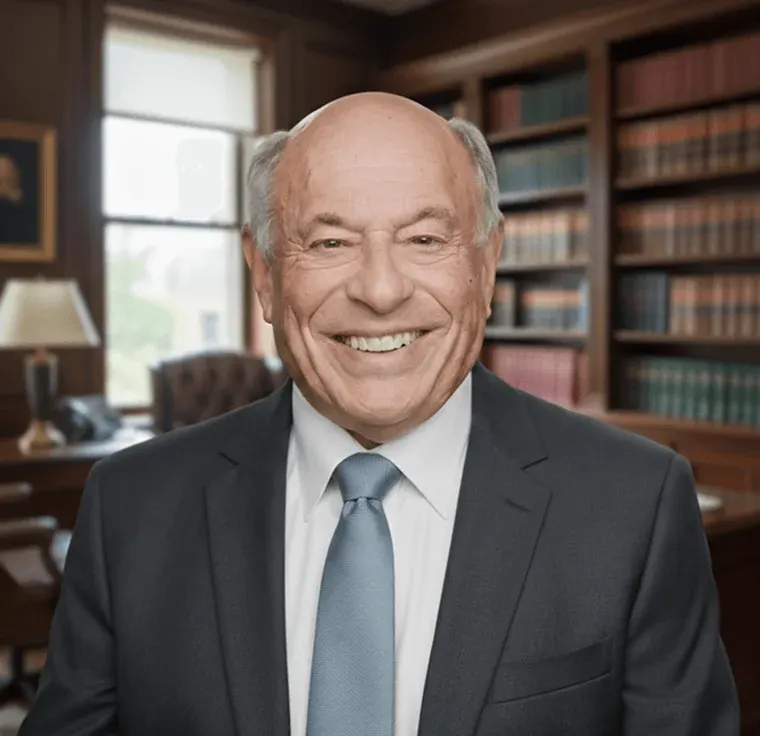
Your attorney
Every matter at the firm is handled personally by Paul — the same attorney reads the documents, gives the advice and negotiates on your behalf.
Contact
Describe what the business is dealing with — a contract on your desk, a deal in progress, a dispute or a company you are about to form. You will hear back from the attorney who handles the work.
Start a conversation