
Dispute Resolution · Business Debt Collection
Getting Paid When Another Business Owes You Money
An unpaid commercial account is a legal claim with a shelf life. The firm helps New Jersey companies turn overdue receivables into payment — first by pressure and negotiation, and when that fails, by judgment and enforcement.
Business-to-business collections
Collection work starts with three questions, not a lawsuit
Before spending anything on recovery, a creditor needs to know whether the debt is provable, who is legally responsible for it, and whether that party can actually pay.
A supplier chasing a contractor for materials, a staffing agency owed for months of placements, a consultant whose client stopped paying after the project ended: each holds a claim, but the right approach differs. A well-documented debt owed by a solvent company with a signed personal guarantee is a very different file from an emailed quote, a handshake extension of terms and a customer that has quietly stopped answering the phone.
Paul reviews the paper trail first: the signed agreement or credit application, purchase orders, delivery receipts, invoices, statements and any emails in which the customer acknowledged the balance. From there he recommends the least expensive route likely to produce money, and tells you plainly when the realistic recovery does not justify further spending. Collections are one part of the firm's wider business dispute resolution practice, so a matter that turns contested stays with the same attorney.
This page covers one business collecting from another. Collecting from individual consumers is governed by separate federal and New Jersey consumer-protection rules with their own notice and conduct requirements, and it is not the focus of this practice.

The collection path
How an overdue commercial account is usually pursued
Most matters resolve in the first two stages. The later stages exist so that the earlier ones carry weight.
Account review
Confirm the amount, the contract terms (interest, late charges, attorney-fee clauses, forum and arbitration provisions), the correct legal name of the debtor and any guarantor, and how much time remains to sue.
Attorney demand
A commercial demand letter sets out the balance, the basis for it and a firm deadline. Coming from counsel, it often prompts payment or a serious conversation from a customer that ignored your accounting department.
Negotiated resolution
Where the debtor cannot pay in full, a written payment agreement can add security: a guarantee, a signed acknowledgment of the balance, a default clause and, where appropriate, collateral. A good workout beats an uncollectable judgment.
Filing suit
If the debtor will not engage, a complaint is filed in the New Jersey Superior Court division that fits the amount, or in arbitration if the contract requires it. Many commercial collection cases end in a default or an early settlement.
Judgment and enforcement
A judgment is a tool, not a payment. Enforcement can include information subpoenas to locate assets, bank levies through a writ of execution, and docketing the judgment so it can attach to real property.
Who is responsible
Reaching beyond a company that will not pay
The hardest collection problem is a debtor entity with no money. An LLC or corporation generally shields its owners from company debts, so the real question is whether anyone else has signed up for the obligation.
- Personal guarantees in a credit application or master agreement are separate promises that can be enforced against the guarantor directly; the wording and signature block matter.
- Co-obligors and affiliated entities may be liable if they placed the orders or received the goods.
- Construction suppliers and subcontractors may have lien and payment-bond rights with strict deadlines measured from the last date of work.
- Secured creditors with a UCC filing stand ahead of unsecured trade creditors, which affects what is left to collect.
- Transfers of assets to insiders while a debt was outstanding can sometimes be challenged, though that analysis is fact-heavy.
Arguing that the owner should be liable simply because the company is undercapitalised is rarely a quick path; courts disregard the entity only in limited circumstances. A guarantee obtained at the start of the relationship is worth far more than a veil-piercing theory at the end of it.
Matching tool to situation
Which approach tends to fit which debtor
These are starting points; the documents and the debtor's finances decide the actual plan.
| Situation | Usual first move | What to watch |
|---|---|---|
| Customer admits the balance but says cash is tight | Written payment agreement with default terms | Get the acknowledgment in writing and signed |
| Customer disputes quality or quantity | Demand letter plus document review of the dispute | Treat it as a contract dispute, not a pure collection |
| Customer has gone silent | Demand letter, then suit if no response | Check whether assets are being moved or the business is closing |
| Signed guarantee exists | Demand on both the company and the guarantor | Confirm the guarantee covers this debt and has not lapsed |
| Debtor has filed bankruptcy | Stop collection; file a proof of claim | The automatic stay bars further collection efforts |
When the customer's real complaint is that you under-delivered, the matter belongs with the firm's breach of contract dispute work rather than a straightforward collection.
Bring to the first call
A collection file Paul can act on quickly
The faster the balance can be proven, the cheaper it is to collect.
- Signed contract, credit application or terms and conditions the customer accepted
- Any personal guarantee and the guarantor's address
- Invoices, account statements and a running ledger of payments and credits
- Proof of delivery or completion: signed receipts, sign-off emails, photos
- Emails or texts where the customer acknowledged owing the money or promised to pay
- Notes of prior collection calls and any promises made in them
- The date of the last payment and the date the oldest unpaid invoice fell due
Those last dates matter because a claim can expire. The firm's guide to the time limits for suing on a business debt explains how the clock generally works in New Jersey.
Questions & answers
Commercial collection questions
Can I collect from the owner personally if their company does not pay?
Usually only if the owner signed a personal guarantee or otherwise took on the obligation in their own name. An LLC or corporation normally protects its owners from business debts. Courts can disregard the entity in limited situations involving abuse of the corporate form, but that is difficult to prove and rarely a fast route to payment.
What happens after I get a judgment against a business in New Jersey?
The judgment gives you enforcement rights, but the debtor will not necessarily pay voluntarily. Typical next steps are an information subpoena to identify bank accounts and assets, a writ of execution to levy those accounts or other property, and docketing the judgment so it can become a lien on real estate. The value depends on what the debtor owns.
Is a demand letter from a lawyer worth sending before suing?
In most commercial matters, yes. It is inexpensive compared with litigation, shows the debtor you are prepared to act, and often produces payment or a payment plan. It also forces the customer to state any dispute now, which tells you whether you are facing a simple collection or a contested contract case.
Do consumer debt collection laws apply when one business collects from another?
The main federal debt collection statute and related New Jersey consumer rules are aimed at debts owed by individuals for personal or household purposes, so a debt owed by a company for business purchases is generally outside them. Collecting from an individual guarantor can raise different considerations, so the approach should be reviewed case by case.
Your attorney
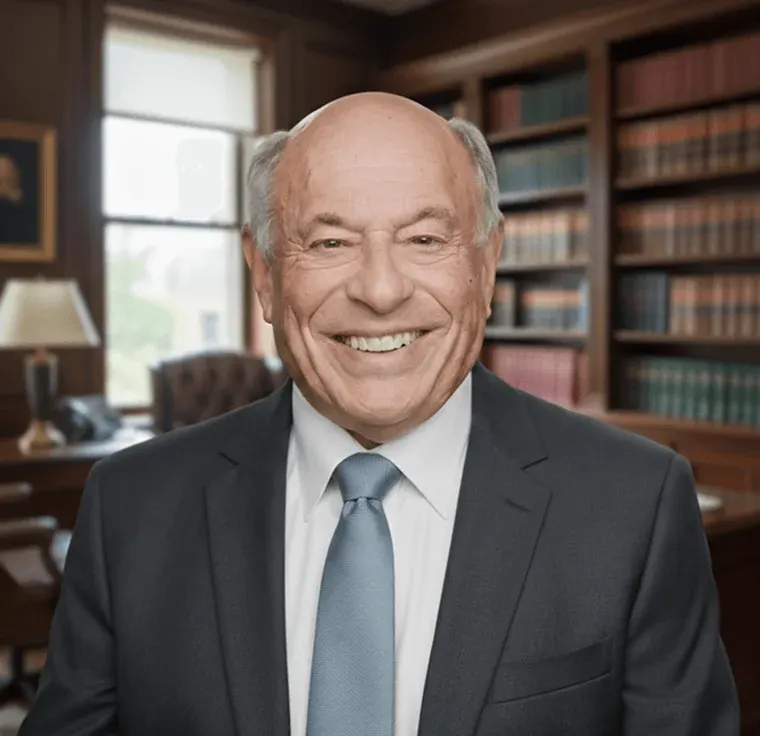
Paul H. Appel, Esq.
Every matter at the firm is handled personally by Paul — the same attorney reads the documents, gives the advice and negotiates on your behalf.
- Education
- Columbia Law School, Juris Doctor (1967)
- Experience
- 58+ years in commercial and business law
- Focus for this matter
- Negotiated resolution, mediation and arbitration of business disputes
- Office
- Freehold, NJ — serving Monmouth, Middlesex & Ocean Counties
Contact
Discuss Your Business Matter With Paul
Describe what the business is dealing with — a contract on your desk, a deal in progress, a dispute or a company you are about to form. You will hear back from the attorney who handles the work.
- Phone917-748-6124
- Office11 Crestwood Drive, Freehold, NJ 07728
- ConsultationsBy phone, video or in person by appointment
Start a conversation