
Partnerships · New Jersey
Written Partnership Agreements for New Jersey General Partnerships, LPs and LLPs
Two people who go into business together are partners in the eyes of the law, whether or not they sign anything. A written agreement decides whether that relationship runs on their terms or on the statute's.
Why put it in writing
A partnership can exist without a single document
Under New Jersey's Uniform Partnership Act, a general partnership generally arises whenever two or more people carry on a business together as co-owners for profit — even if they never call it a partnership.
That is how many partnerships begin: a shared van, a joint bank account, a split of the proceeds. It works until something changes. One partner wants to bring in a relative; another signs a supplier contract the first did not know about; someone wants out and asks for half of everything. Without an agreement, the statute supplies the default rules, and they are often not the answers either partner expected — equal shares regardless of what each put in, for example, or broad authority for each partner to bind the business.
The firm drafts partnership agreements for new ventures and for informal partnerships that need to be formalized, and helps partners decide whether a partnership is the right vehicle at all. The broader set of options is described on the business entity formation page.

The three forms
General partnership, limited partnership and LLP compared
| General partnership | Limited partnership (LP) | Limited liability partnership (LLP) | |
|---|---|---|---|
| How it is created | By conduct; no filing required | Certificate of limited partnership filed with the State | Registration filed with the State, usually by an existing partnership |
| Who manages | All partners, unless the agreement says otherwise | General partners; limited partners are generally passive | All partners, as the agreement provides |
| Personal exposure | Each partner is exposed to partnership obligations | General partners exposed; limited partners generally limited to their investment | Partners generally shielded from partnership obligations, but remain responsible for their own conduct |
| Common uses | Small joint ventures — often by accident | Real estate and investment vehicles with passive capital | Professional firms and partnerships wanting a liability shield without converting |
Liability rules for each form have conditions and exceptions, so the protection a structure offers should be confirmed for your circumstances rather than assumed.
Key clauses
What a partnership agreement needs to cover
These are the provisions that most often decide whether a partnership survives a disagreement.
Authority to bind
Every general partner can ordinarily commit the partnership in the normal course of business. The agreement should set signing limits and list decisions requiring joint approval.
Capital and percentages
What each partner contributes, whether contributions earn interest or a preferred return, and how profits and losses are allocated when contributions are unequal.
Draws and compensation
Whether partners take regular draws, salaries or guaranteed payments, and how those are reconciled against each partner's share at year end.
Duties between partners
Partners owe each other duties of loyalty and care. The agreement can define time commitments, outside business activities and conflicts within the limits the law allows.
Departure and buy-out
What happens on withdrawal, death, disability or expulsion: whether the business continues, how the departing interest is valued, and over what period it is paid out.
Disputes and dissolution
A process for resolving disagreements before litigation, and an orderly path for winding up if the partners decide to end the business.
A threshold question
Partnership or multi-member LLC?
Many people who say they want a partnership actually want what a multi-member LLC provides: partnership-style tax treatment by default, flexible profit sharing, and a liability shield for every owner. For most new operating businesses with active co-owners, that combination is hard to beat, and the governing document is an operating agreement rather than a partnership agreement.
A partnership form still has its place. Limited partnerships remain common in real estate and investment deals where a sponsor manages and investors stay passive. LLP status suits some professional practices. And existing informal partnerships sometimes need a written agreement now, with a conversion to an LLC considered once the immediate risk is addressed. The entity selection guide sets out the wider comparison.
Before the first draft
Questions partners should talk through together
Agreements go faster — and hold up better — when the partners have discussed these points honestly before the drafting starts.
- What is each of us contributing now, and what might each be asked to contribute later?
- How much time is each partner expected to devote to the business?
- Who can sign contracts, hire staff or borrow money without asking the other?
- How and when do we pay ourselves?
- Can either of us run a competing or side business?
- If one of us wants out, how is the price set and how quickly is it paid?
- What happens to the business if a partner dies or becomes unable to work?
Partners who are already at odds over these questions may need help resolving the dispute before an agreement can be signed; the firm's partnership dispute services cover that situation.
Questions & answers
Partnership agreement FAQ
Do we need a written partnership agreement in New Jersey?
The law does not require one, which is exactly why it matters. Without a written agreement, the Uniform Partnership Act's default rules govern profit shares, authority, departures and dissolution, and an oral understanding is hard to prove once partners disagree. A written agreement lets you replace those defaults with terms you have chosen and gives each partner a clear record of the deal.
What is the difference between an LP and an LLP?
A limited partnership has two classes of partner: general partners who manage and carry personal exposure, and limited partners who invest and generally do not manage. A limited liability partnership is a partnership whose partners all generally enjoy a liability shield for partnership obligations after the partnership registers with the State. Both require a State filing; an ordinary general partnership does not.
Can a partnership agreement stop a partner from competing after leaving?
It can include restrictions, but New Jersey courts test them for reasonableness: the restriction must protect a legitimate business interest, must not impose undue hardship on the departing partner, and must not harm the public. Courts may narrow an overbroad clause rather than enforce it as written. Restrictions tied to a buy-out of the departing partner's interest tend to be on firmer ground.
How are partnerships taxed?
A partnership generally does not pay federal income tax itself; it files an information return and allocates income and losses to the partners, who report them on their own returns. New Jersey has its own partnership filing requirements as well. Because allocations and filing obligations can be complex, confirm the details with your accountant when the agreement is being drafted.
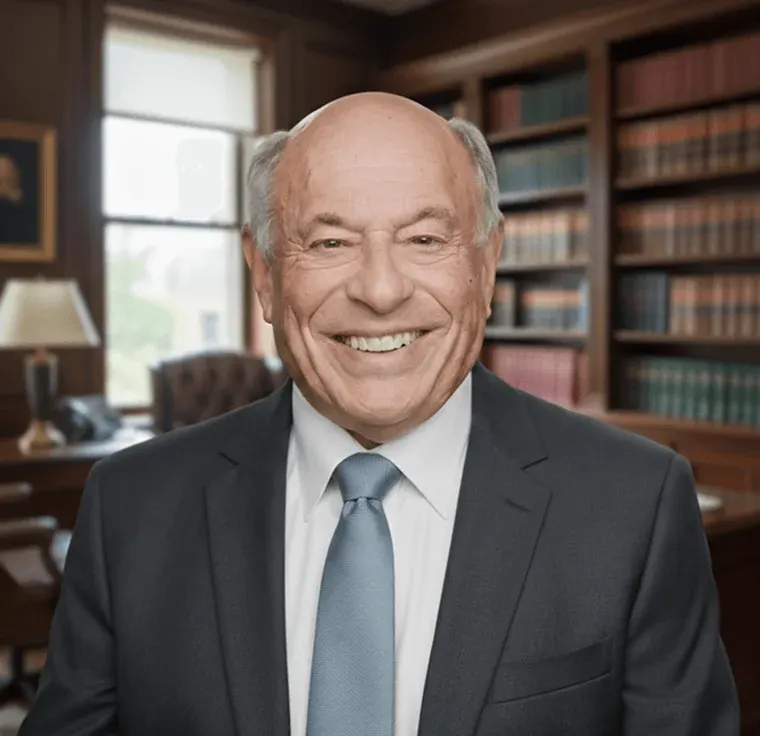
Your attorney
Paul H. Appel, Esq.
Every matter at the firm is handled personally by Paul — the same attorney reads the documents, gives the advice and negotiates on your behalf.
- Education
- Columbia Law School, Juris Doctor (1967)
- Experience
- 58+ years in commercial and business law
- Focus for this matter
- Entity formation, operating agreements, bylaws and governance records
- Office
- Freehold, NJ — serving Monmouth, Middlesex & Ocean Counties
Contact
Discuss Your Business Matter With Paul
Describe what the business is dealing with — a contract on your desk, a deal in progress, a dispute or a company you are about to form. You will hear back from the attorney who handles the work.
- Phone917-748-6124
- Office11 Crestwood Drive, Freehold, NJ 07728
- ConsultationsBy phone, video or in person by appointment
Start a conversation