
Middlesex County · Commercial Contracts

Contracts for Middlesex Companies That Ship, License and Supply

In a county full of distribution buildings, manufacturers and vendors to research institutions, the agreements a company signs every week carry more risk than any single lawsuit. This page focuses on those contracts — supply, warehousing, licensing and lease terms — and how to review them before they bite.

  • Supply, licensing and lease agreements
  • Clause-level review and redlines
  • Flat-fee and retainer options

Request a Consultation

Send the agreement you have been asked to sign, or describe the relationship you need papered, and Paul will explain where the risk sits.

Request a Consultation

Why contracts, why here

Middlesex businesses live inside other people's paperwork

A distributor near a Turnpike interchange, a fabricator in Edison or a software vendor serving a hospital system near New Brunswick usually signs far more contracts than it drafts. The customer's form or the landlord's lease arrives first, and the pressure is to sign it quickly.

That is where most commercial risk is created. A buried indemnity clause, a limitation of liability that only protects the other side, an auto-renewal with a short cancellation window, or a forum clause pointing to another state can turn a routine relationship into an expensive one. None of those terms announce themselves; they sit on page nine of a document the operations team was told to return by Friday.

The firm reviews, drafts and negotiates these agreements for Middlesex County companies. For the county's broader business picture and the full range of services available there, see the Middlesex County business attorney hub.

Contract by contract

The agreements that drive risk for contract-heavy industries

AgreementWho signs itClauses to read first
Supply or purchase agreementManufacturers, distributors, wholesalersPrice adjustment, delivery terms, risk of loss, warranty disclaimers, remedies for late or non-conforming goods
Warehousing or fulfillment agreementThird-party logistics providers and their customersLiability caps per unit or per pound, insurance, claims notice periods, lien rights on stored goods
Industrial or warehouse leaseDistribution and light-industrial tenantsOperating-expense pass-throughs, repair and roof obligations, permitted use, assignment and subletting
Software or technology licenseTech firms licensing out, and companies licensing inScope of license, ownership of improvements, data handling, termination and transition
Master service agreementVendors to large research, healthcare or corporate customersIndemnity, insurance minimums, confidentiality, audit rights, payment timing
Independent contractor agreementCompanies using developers, drivers or techniciansOwnership of work product, confidentiality, and facts relevant to New Jersey's ABC test

Each of these documents has its own deeper service page — for example, vendor and supplier contracts and licensing agreements.

Recurring problems

Three contract traps Middlesex companies run into

Battle of the forms

When the purchase order and the invoice disagree

Sales of goods are governed by Article 2 of the Uniform Commercial Code as adopted in New Jersey. When a buyer's purchase order and a seller's acknowledgment carry different terms, the UCC has rules for which terms become part of the contract — and the answer is not always "whoever sent the last document". A signed master agreement that controls over order forms removes most of the guesswork.
Limitation of liability

Caps that protect only one side

Large customers often cap their own liability at a small multiple of fees while leaving the vendor's indemnity uncapped. Negotiating mutual caps, carve-outs that make sense and an indemnity tied to fault is one of the most valuable things a contract review can achieve.

Intellectual property

Who owns what a contractor builds

Software, designs and process improvements created by an outside developer do not automatically belong to the company that paid for them. A written assignment of rights, signed before work starts, is the usual safeguard, alongside a confidentiality agreement.

A practical review process

How the firm reviews an incoming contract

  1. Tell Paul what the deal is

    A short summary of the relationship, the value involved and the deadline lets the review focus on what matters commercially rather than on boilerplate.

  2. Issues list in plain English

    You receive a prioritized list: terms that should be changed, terms worth asking about, and terms that are ordinary for this kind of agreement.

  3. Redline and negotiation

    Paul prepares a marked-up draft and, if you want, negotiates directly with the other side or its counsel.

  4. A standard for next time

    Companies that sign similar agreements repeatedly can build a fallback position for each key clause, so routine contracts move faster without a full review every time.

Volume work

When the stream of agreements never stops

For a growing distributor or technology vendor, contract review is not a one-off project. New customers, renewals, amended statements of work and landlord notices arrive every month. In that situation, many companies prefer a monthly arrangement under which agreements are reviewed as they come in and a running list of open issues is maintained.

The firm's ongoing contract and policy review service is designed for exactly that rhythm. It also tends to surface patterns — the same unfavorable clause appearing in several customers' paper, for instance — that a company can then address with standard terms of its own.

Questions & answers

Middlesex contract questions

Whose terms control when our purchase order and the supplier's invoice conflict?

For sales of goods, New Jersey's version of UCC Article 2 sets rules for conflicting forms. Depending on the wording and the parties' conduct, some of the seller's additional terms may become part of the contract while others drop out, and conflicting terms can be replaced by default rules. The outcome is fact-specific, which is why a signed master agreement stating that it controls over individual order forms is so useful.

What should we check before signing an industrial lease?

Start with the costs that sit outside base rent: operating expenses, taxes, insurance and any responsibility for the roof, structure or parking areas. Then confirm the permitted use covers everything you do on site, including any hours or truck traffic, and read the assignment clause carefully if you may sell the business or bring in an affiliate.

A large customer says its master service agreement is non-negotiable. Is a review still worthwhile?

Usually, yes. Even when a customer will not change much, a review tells you what you are agreeing to — insurance you must carry, indemnities you are giving, audit rights and payment terms — so you can price and manage the risk. In practice, many customers will adjust a limited number of points when a vendor raises them clearly and early.

How long do we have to bring a claim if a supplier breaches?

Contract claims in New Jersey generally carry a six-year limitations period, while claims for breach of a contract for the sale of goods generally carry four years under the UCC. Contracts can sometimes shorten these periods, and when a claim accrues depends on the facts, so it is wise to act promptly once a problem appears.

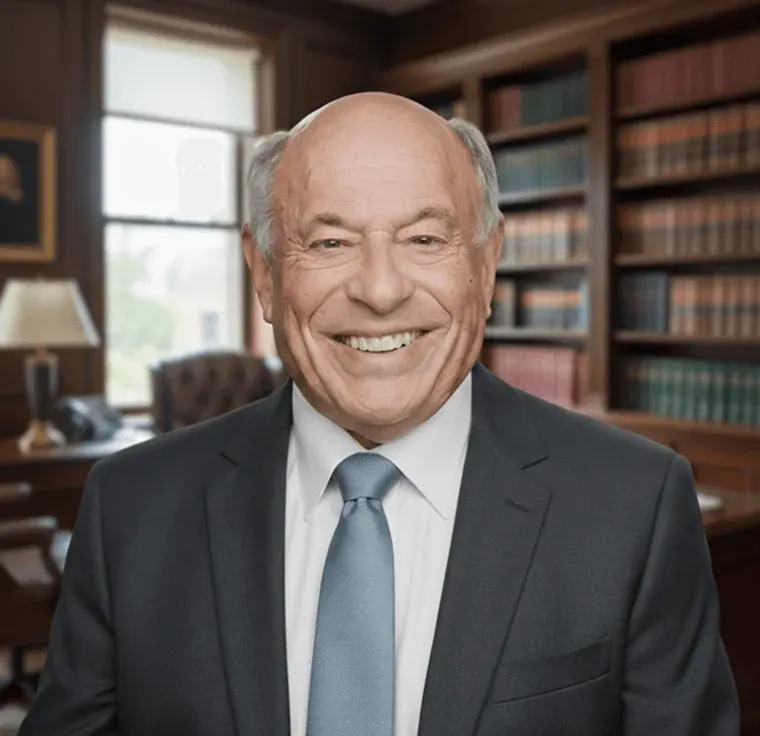
Paul H. Appel, Esq., business attorney, in his law library

Your attorney

Paul H. Appel, Esq.

Every matter at the firm is handled personally by Paul — the same attorney reads the documents, gives the advice and negotiates on your behalf.

Education
Columbia Law School, Juris Doctor (1967)
Experience
58+ years in commercial and business law
Focus for this matter
Commercial and business law for owner-run companies
Office
Freehold, NJ — serving Monmouth, Middlesex & Ocean Counties
More about Paul and the firm

Contact

Talk to Paul About Your Business

Describe what the business is dealing with — a contract on your desk, a deal in progress, a dispute or a company you are about to form. You will hear back from the attorney who handles the work.

Start a conversation

Schedule a Free Consultation

Loading the secure consultation form… If it does not appear, call 917-748-6124 or email paul@paulappellaw.com.